Published on Sep 12, 2017Apple introduced its latest iPhone 8 and 8Plus which comes with some upgrades over its predecessor including a faster processor, improved camera, and augmented reality capability.
Showing posts with label iPhone. Show all posts
Showing posts with label iPhone. Show all posts
Tuesday, September 12, 2017

Monday, June 26, 2017
Automatic Setup in iOS 11
https://youtu.be/RJdsuUVuzgg
Published on Jun 19, 2017In iOS 11 it is now possible to use an existing iOS device to set up a new one. Here is Automatic Setup in iOS 11!
Wednesday, November 23, 2016
Chelsea Ann Stark: Hotmail And iPhone4s Frenzy

If you have a Hotmail email account you probably went through this Tuesday, November 22, 2016.
To read this post please go to http://chelseaannstark.blogspot.com/2016/08/hotmail-and-iphone4s-frenzy.html
Wednesday, November 2, 2016
Apple Pay: help people who are blind or vision impaired to be more independent
I


ANZ bank is already on board with Apple Pay within Australia. Why are all the other banks with in Australia taking longer to follow suit?
Bringing apple pay to all banks can make a big impact on peoples lives, particularly those who have disabilities. Using one device instead of keeping track of several cards makes paying easy for everyone.
Apple pay makes paying Simple, secure and private. Gone are the days of searching for your wallet and the wasted moments finding the right cards which are not accessible for people who are blind or vision impaired due to the pore font size and the colour contrast of the cards which are issued to us by our bank providers.
The other good thing about apple pay is your card details are never shared when you use Apple Pay. In fact, they aren’t stored on your device at all!
With your signature, your not only helping people who are blind or vision impaired. Your helping everyone in the general public.
Monday, July 25, 2016
How to fix iPhone battery life in the age of Snapchat and Pokémon Go ByiiMore
 |
As more users spend their days in battery-demanding apps, Apple needs to consider evolving battery life to meet that demand.
So, how can Apple and the iPhone evolve to handle them?
|
Saturday, April 9, 2016
iPhone SE proves size doesn’t matter [Reviews

Photo: Sam Mills/Cult of Mac
I forgot how good it feels to hold 4 inches of magic in my hands.
Spending the past year and a half with the luxurious 5.5-inch screen of the iPhone 6 Plus and 6s nearly convinced me that bigger really is better. But after using the iPhone SE, I’m starting to rethink everything I love about iPhone.
The moment I clasped the iPhone SE it was like reconnecting with an ex-lover. Everything is familiar and yet it has somehow improved in nearly every single way. I’ve been re-captivated by its beauty, brains, and brawn all over again, even though on the outside, it looks like such a boring device.
How can an iPhone that looks so old feel so right?
Iconic design
If you like the classic design of the iPhone 5 and 5s you’ll love the iPhone SE. The chamfered edges don’t change the feel much. While the curved body of the iPhone 6 and iPhone 6s is elegant, the design of the iPhone SE is perfectly iconic.
The first thing I noticed when picking up the SE is how much I’ve missed the flat edges and it’s sturdy build. Having the power button back at its rightful place at the top is nice. I also love the round volume buttons, which are more distinctive than the set on the 6/6s that sit more flush with the case.
The very best thing about the iPhone SE design though is that it fits in my Donald Trump-size hands. Typing with one hand feels so damn good. The SE body also doesn’t come with a camera bump, which might become a rarity. I also realized this could be the last iPhone Apple makes with a headphone jack.
Oh yeah, and it comes in pink!
Grunt

Photo: Ste Smith/Cult of Mac
The iPhone SE is screaming fast. The only iOS device that’s markedly faster is the iPad Pro, which is utterly remarkable given its small size and budget-friendly price tag.
Cheap phones are usually underpowered, but with the A9 processor powering the iPhone SE, it can handle practically anything apps throw at it. It’s the Mighty Mouse of iPhones.
Along with the faster processor the iPhone SE has a couple other internal improvements over the iPhone 5s that make it a more modern device. Apple added faster WiFi and LTE speeds. It also packs Bluetooth 4.2, NFC and Touch ID, bringing Apple Pay support.
There’s something amazing about having a small phone that’s wicked powerful. Since reviewing the iPhone SE I haven’t had any problems with apps freezing. Multitasking has been a breeze. Editing pictures and playing games has been just as fast as on my iPhone 6s, and I’m starting to find that I prefer to do most tasks on the smaller device.
That screen

Photo: Sam Mills/Cult of Mac
No other company makes a decent smartphone with a 4-inch screen anymore. The iPhone SE isn’t just a decent phone though, its a great iPhone, and the tiny screen is actually a delight. Sure, you won’t really want to read a novel off it like the iPhone 6s Plus, but I find it’s perfect for everything I want to do on my iPhone.
The smaller size means most people will be able to reach from the bottom corner to the top without contorting your hands into some franken shape. I’m always dropping my iPhone 6s when trying to use it one-handed. The iPhone SE hasn’t slipped from my grasp once.
There are some drawbacks to the little screen though. The contrast-ration is slightly worse than the iPhone 6s. There’s also no 3D Touch, but that’s not much of a loss. I’m also not going to be able to turn it into a VR headset, and some websites and apps don’t display as nicely. However, I feel like it’s a less-distracting device.
My attention doesn’t get swallowed up by a giant screen that begs me to watch just one more YouTube video. I pull it out, check my apps, send messages, take a picture, and then it’s back in my pocket. It’s so small I almost forget it its there, unlike the 6s Plus which causes some pinching in the trousers.
The camera

Photo: Sam Mills/Cult of Mac
If you’re upgrading from an iPhone 5s or lower, the camera alone on the iPhone SE is worth the price tag. For $399 you essentially get a great point-and-shoot camera, that is also a kickass smartphone.
One reason I love the iPhone SE design is it feels so much better using it as a camera than the iPhone 6/6s. Now that Apple has added a 12MP rear-camera sensor to the 4-inch device, it seems like it could be a favorite among photographers.
The only drawback to the iPhone SE cameras is the front-facing Facetime camera. Instead of bumping up the sensor to 5 mega-pixels, Apple kept the same 1.2 mega-pixel sensor from the iPhone 5s, so your selfie-game will take a serious hit.
The pictures coming off the iPhone SE iSight camera though are just as good as the snappies you’ll get on the iPhone 6s. Low-light photos are still pretty grainy and pixelated, but it also shoots 4K video and LivePhotos. The SE actually fits comfortably in my running shorts too, so I’ll be more likely to take it with me everywhere, and pull it out more.
Amazing battery life

Photo: Sam Mills/Cult of Mac
Smaller size doesn’t mean weaker battery life. In my brief testing I’ve found the iPhone SE has way better battery life than my iPhone 6s, even though I’m using it just as much, if not more.
The iPhone SE’s pared-down features allow it to sip battery life slower while giving essentially the same performance. I can actually make it through a full day of heavy usage without needing to recharge it.
Friendly price
For the first time in my life, I bought a new Apple product without having to worry about it destroying my bank account. The $399 starting price is great for people on a budget, teens or anyone who just wants an affordable phone. The 64GB model is pretty much a no-brainer $499 upgrade though if you do anything more than surf Safari and Facebook.
Secret loves
I don’t know if I’m going to go back to my iPhone 6s.
Despite its diminutive stature, the iPhone SE is a good size with a lot of power and a perfect design that will make you fall in love all over.
The iPhone SE’s greatest feat is that it will make you question whether or not you really need an iPhone 6s. Sure the 6s is bigger. It’s got a sleeker body, and a couple new tricks. But the iPhone SE is a classic reincarnated for a farewell tour that demands your attention.
And I can’t let go.
Wednesday, March 23, 2016
iPhone SE unboxing!
Rose gold iPhone SE Unboxing
Watch as we take the rose gold iPhone SE out of the box, comparing it to an iPhone 5, iPhone 6s, and iPhone 6s Plus.
Friday, February 19, 2016
iPhone and iPad Apps for the Blind And Visually Impaired : Should Applecomply with the order to unlock San B...

News broke yesterday that a United States magistrate judge in California ordered Apple to comply with the FBI’s request for assistance in bypassing the passcode lock of the San Bernardino gunman’s iPhone. Hours later Apple published an open letter by Tim Cook explaining that creating a tool to bypass this specific iPhone would jeopardize the security of all iPhones.
The battle between personal privacy and information gathering as it relates to Apple and security has been building up for years now, and the government narrowing it down to one specific iPhone used by a terrorist in the U.S. has caused the debate to reach new levels. This may be Apple’s battle to lose, but it will be a very public one nonetheless.
Since Apple’s response to the FBI and court order, the White House has stood by the Department of Justice and argued that it’s not about a backdoor for all devices but just a single device, which Tim Cook’s argument already addressed.
Tim Cook’s open letter is on Apple’s homepage and headlines about the government’s demands are all over the news.
Tim Cook’s open letter is on Apple’s homepage and headlines about the government’s demands are all over the news. From my view, Apple customers seem to be overwhelmingly in favor of Tim Cook’s position, while presidential candidates are unsurprisingly siding with the FBI. Where do you weigh in? Here’s what we know so far.
iPhones with passcode locks are currently disabled after multiple failed attempts to guess passwords. Try too many incorrect passcodes on an iPhone and you’re temporarily only allowed to place emergency calls for 1 minute. Try again after that and it extends to 5 minutes, then 15 minutes, and so on. Optionally, iPhones can be set to erase all data after just 10 failed attempts.
In Cook’s words, this is how he describes the government’s request:
The government would have us remove security features and add new capabilities to the operating system, allowing a passcode to be input electronically. This would make it easier to unlock an iPhone by “brute force,” trying thousands or millions of combinations with the speed of a modern computer.
Wednesday, December 16, 2015

Monday, October 5, 2015
Apple iPhone 5S
 Apple's new iPhone 5s will feature Touch ID, a fingerprint sensor whcih will be used for security and authentication. This new feature will greatly aid blind and visually impaired users who currently struggle with or ignore the passcode ID security feature on the iPhone. Also, buying Apps from the App Store and music and videos from iTunes will no longer require users to enter their passwords if they have an iPhone 5s. Simply place your thumb over the home button and your transactions will now be authenticated and executed. NICE!!!
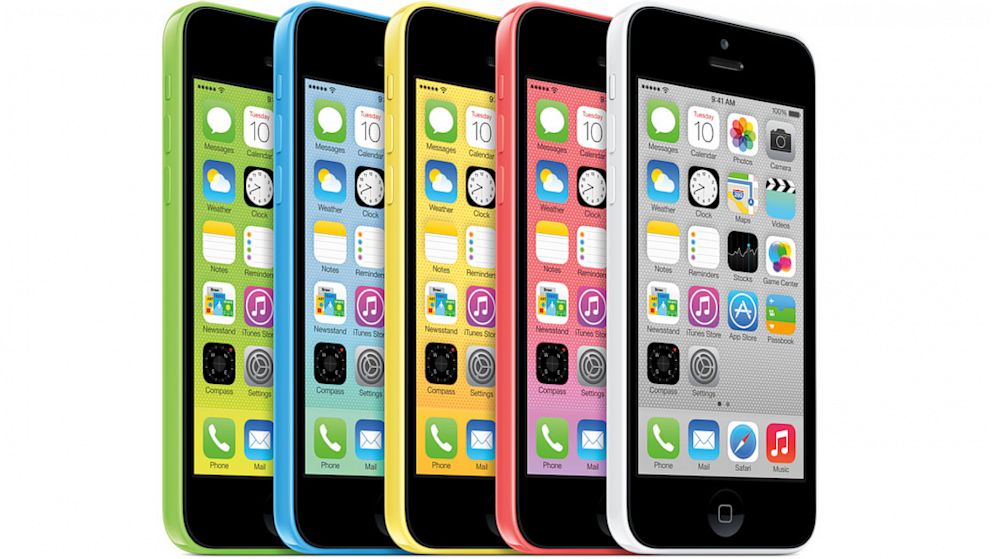
by Apple, the 5C is certainly more colorful than any other Apple phone, perhaps even more colorful than any iPod. Instead of the metallic finishes that usually adorn Apple products, the 5C's color scheme looks like it was designed by either a candy manufacturer or an elementary school art class.
However, Apple emphasizes that though it looks playful, it is still a phone equal in power and performance to the iPhone 5. Phil Schiller, Apple's VP of marketing, said that the company also hasn't skimped on its structure, saying that the 5C is reinforced with steel. "You are going to be blown away by how rigid and great it feels in your hand," said Schiller.
Monday, June 1, 2015
Apple iPhone 5
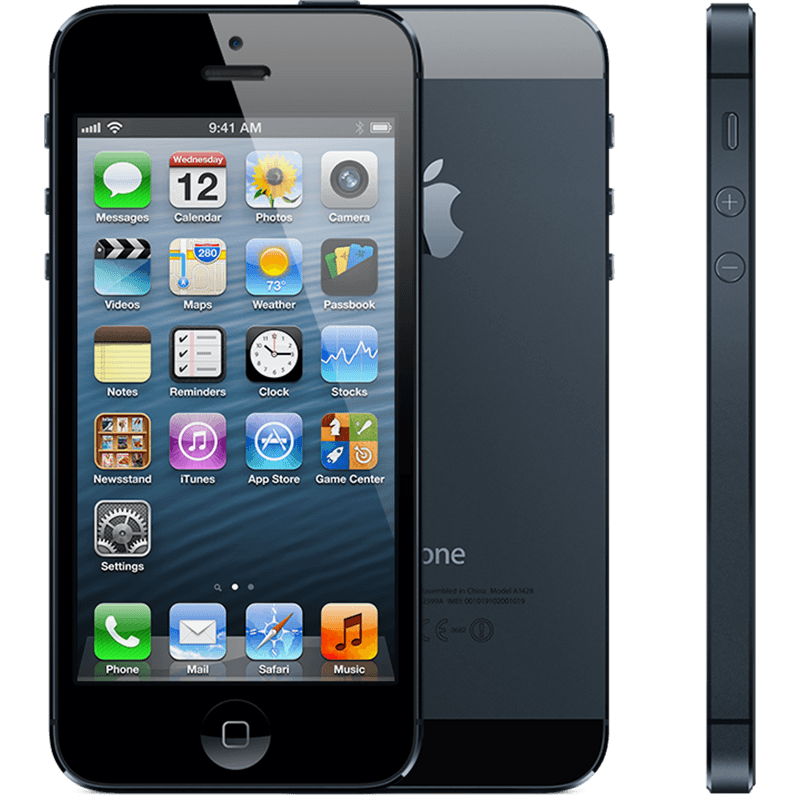
Thank you techradar.com for the information for this post.
The excitement of the rumor mill, the titillation of every leaked photo led to higher than ever levels of expectation for the iPhone 5, and while the announcement was greeted with some derision at the lack of perceived headline improvements, the record sales tell an entirely different story.
Given the underwhelming changes to the iPhone 4S, the iPhone 5 really needed to re-energize customers to prove Apple can repeat the game-changing trick it managed with the iPhone 4.
- Design
We'll begin in the traditional manner: how the thing actually feels in the hand. With the iPhone 5 there were many types of prospective buyers: the upgrader from the 4 (or more-money-than-sense iPhone 4S upgraders), those tired of their Android handset and those taking their first steps in the smartphone market and want to get one of them iThingies their friends has.

Well, all of those picking up the iPhone 5 will have the same reaction: this thing is amazingly light. You've probably heard the numbers by now (20 percent lighter than the predecessor, as well as beating most of the opposition too at 112g.)
It's an odd sensation, but it actually detracts from the experience when you first pick it up. We've praised the weighty feel of the iPhone in the past, lending it a premium feel in the face of toy-like phones, and it's almost disappointing that Apple decided to join that clan.
However, through extended use this problem quickly disappears, as the overall effect of the phone is still a chassis designed for strength, it just sits more anonymously in the pocket.

You'll obviously see the change in height, too – the iPhone 5 stands 4.87-inches tall to allow for the larger 4-inch screen. In truth, those not familiar with the iPhone 4S probably wouldn't notice the difference, which is why it's a good move from Apple to include the larger screen if it's not going put people off that hate larger phones.

The decision to stick at 4-inches is Apple's admission that while it recognizes people are all over the idea of having more screen real estate to play with it doesn't want to move away from the thumb-friendly nature of the device.
Through a mixture of moving the centre of gravity slightly as well as repositioning the screen within the bezel, it's still possible to scroll your thumb mostly around the whole display one-handed, which Apple is clearly keen to keep hold of.

However, we're not convinced of that argument any more, and the power button was still a little out of reach when using the phone normally, as was anything in the top left-hand corner of the screen.
This was no issue in reality, as scooting the phone down a bit in the palm is a natural action. But if that's the case, then why not offer a 4.3-inch screen at least?
There's more to a phone than a screen these days (although increasingly less and less) and the general construction of the iPhone 5 is excellent to say the least.

We've tested both the ceramic white version and the anodized black, and the two-tone effect on the back of the phone is stunning, both visually and under the finger.

The two sections of pigmented glass at the top and the bottom of the phone add a pleasant effect, and the sapphire glass is meant to be thoroughly durable, to complement the Gorilla Glass on the front.
Apple knows consumers get furious when they drop an iPhone, and is clearly seeking to stop the smashes before they happen with a tougher exterior - although it seems the anodized black version is more prone to scratching, which means, sadly, you'll have to think about getting a cover for that beautiful frame.
The same industrial band around the outside is in effect again as on the iPhone 4 and 4S, with small sections removed where the antenna joins.
Apple has gone for a more advanced form of antenna here, meaning the days of lost signal are gone, and generally increasing the power of your call connection and GPS lock on, too.

zYou can buy an adaptor, but it's going to be pricey: $30 when it lands in October. And unless you want to keep it permanently attached to the bottom of your iPhone 5 you'll need to buy a few, which is far from ideal.
However, let's not harangue Apple too much for this: a smaller connector is not only easier to use (you can plug the smaller cable in either way round, and the connection feels more solid), but you're rewarded with a thinner and more compact phone to boot.

The decision to move the 3.5millimeter headphone jack to the bottom is an odd one, as while it allows you to slip the phone into the pocket head-first when listening to music, which is a more natural action, it's a real pain in the posterior for some apps that will only work in landscape a certain way up.
Using it this way means your headphones experience will be one of having to jiggle the jack around two fingers.
It's not the most comfortable way to hold a phone, and even when using the phone in portrait mode, the jack gets in the way somewhat.
There are other smaller design changes to the iPhone 5 too, such as the iSight front-facing camera moving to the middle and the home button being noticeably more robust to help reduce instances of a broken portal to your home screen.

But enough about what the phone looks like - the killer question is how the thing feels in hand. We'll sum it up by saying this: smooth. It's a little slippery, and we were always worried we would drop the darn thing.
But that's the only negative thing about the design (apart from the low weight initially) as it sits in the palm nicely and allows you to do it all with one hand, including hitting the top-mounted power/lock button with ease.
That lock button is actually still loose, as it was on the iPhone 4S, meaning when you shake the phone around you can hear it clicking away, which undoes a lot of the premium feel Apple is going for.
Make no mistake, the iPhone 5 is one of the most beautifully crafted phones out there - but when you're paying $199 up front for the thing, we'd hope this would be the very minimum Apple would do.

And while it looks nice, from the front it doesn't really add much to the design of the iPhone - it's certainly not the same as the jaw-dropping design of the iPhone 4 compared to the 3GS... it's just another evolution in the iLine. It's not bad, but for those that hoped the iPhone 5 would be another big change there's a good chance they'll be disappointed about the look... until they feel the lovely back.
There was a real chance here for Apple: remove the bezel and give the front of the screen a look that's similar to the OLED TVs from the likes of Samsung or LG… but instead we're treated to the same lines as before.
You always get the feeling that Apple saves what it can for the next iteration of the iPhone, and while there's nothing wrong with the current construction we can see the edge-to-edge screen becoming something amazing on the iPhone 6.
Subscribe to:
Posts (Atom)